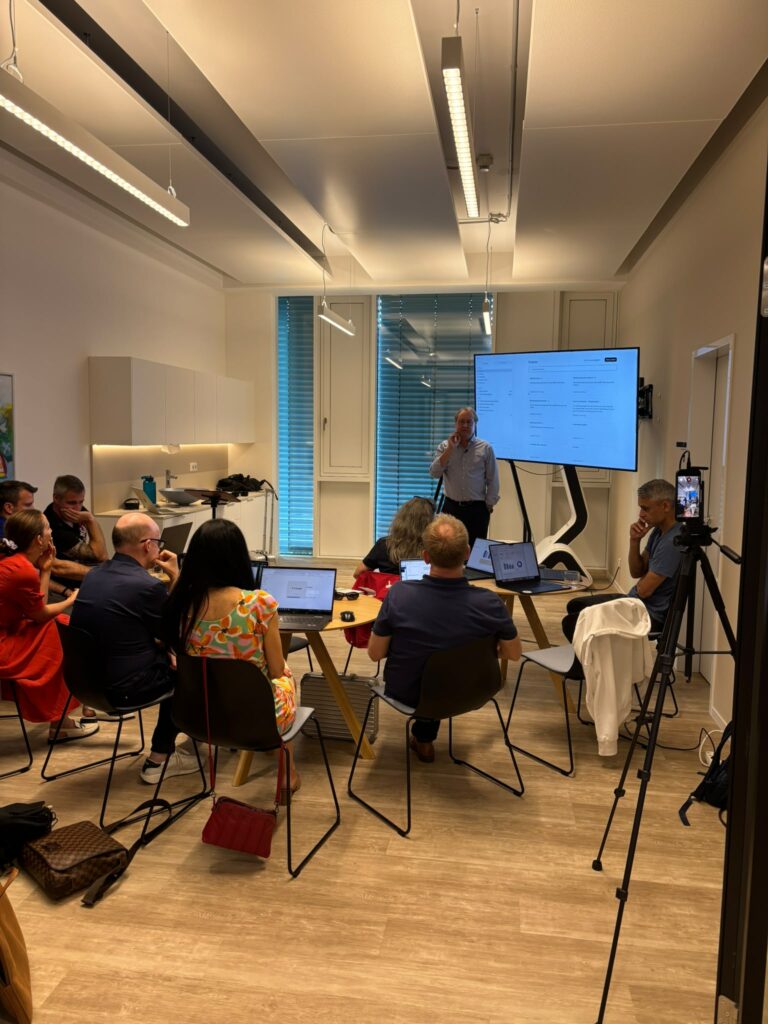
Tuesday evening, a seminar room in Stuttgart; seven laptops are open. For a moment, the room is completely silent: Everyone is typing in their own chat window, each working on their own task from their own company. No slide is explaining anything at this moment, and no presentation is underway. Seven entrepreneurs are simultaneously building—each on their own—their very first AI assistant. It is precisely this moment that sets the tone for the entire evening.
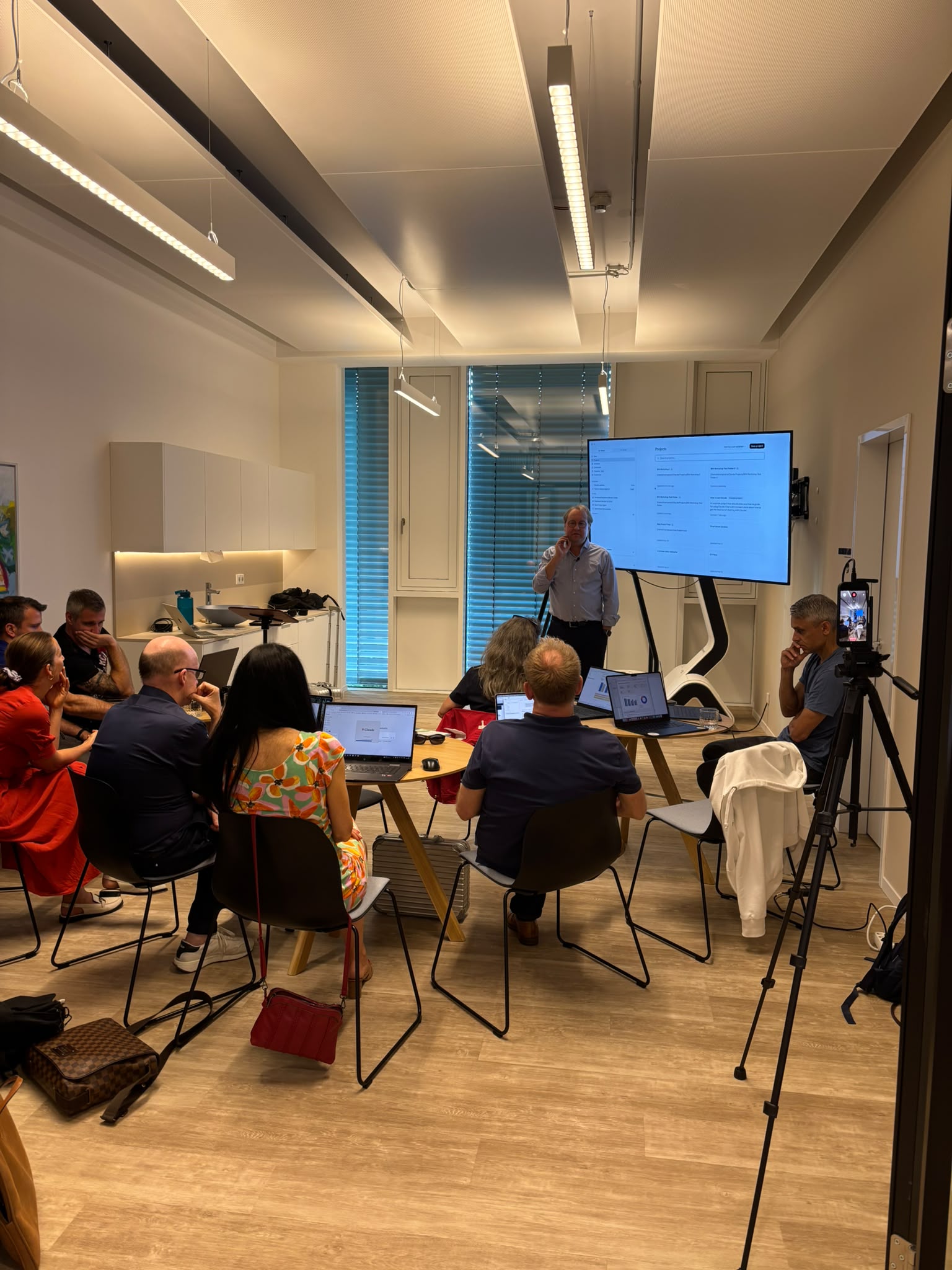
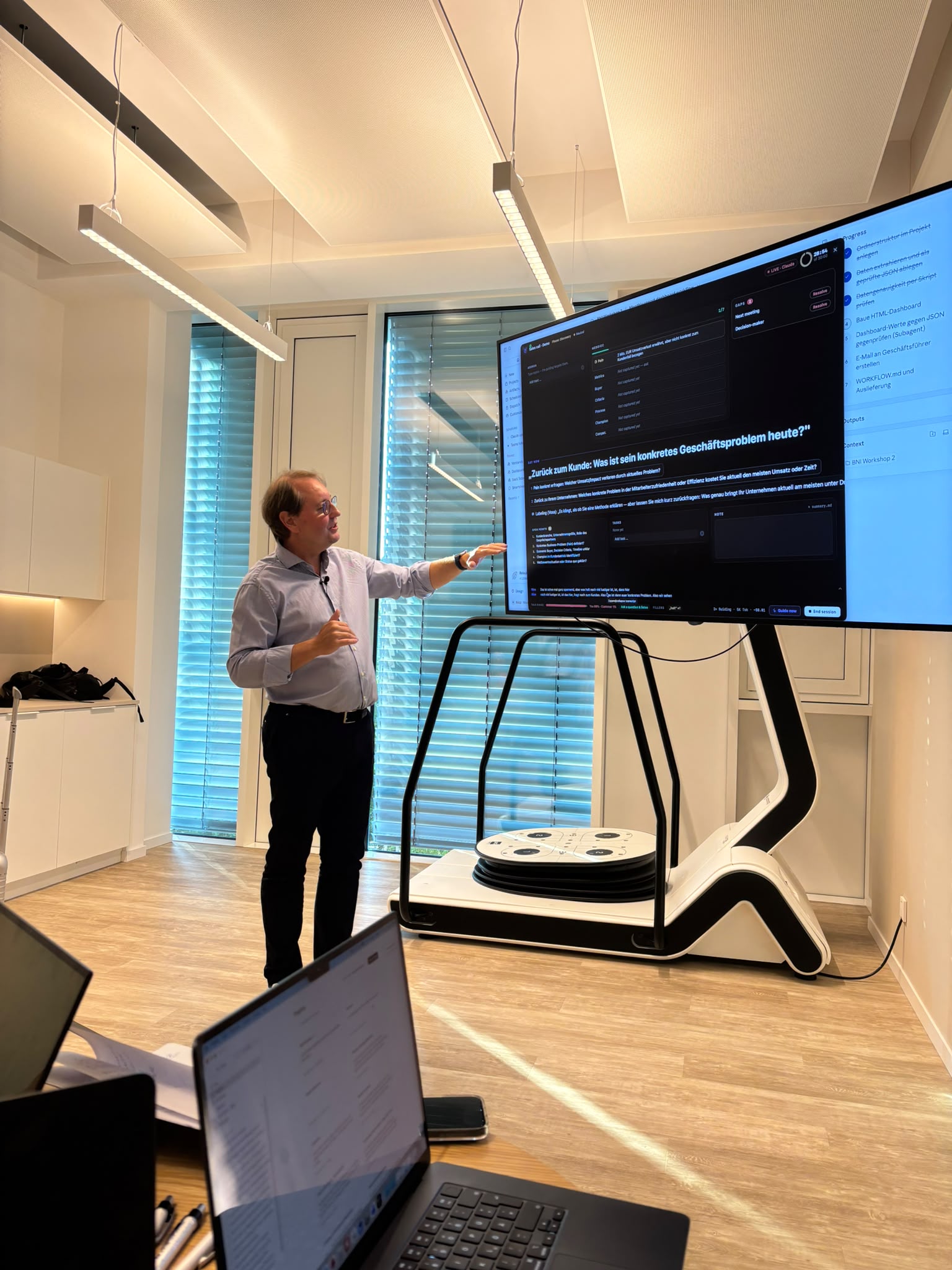
The event was hosted by Lighthouse Consultings, and the guests were members of the BNI Cube Stuttgart chapter. For two hours, using their own laptops and the Claude desktop app—and without any lectures—seven business leaders from various industries came together not only to get to know Claude but also to use it directly on their own projects.
The Evening as a Journey, Not a Lecture
The workshop began with a live tour of the platform: Instead of just watching, everyone clicked their way through Claude themselves, finding their own model, their own project, and their own chat window. Those ten minutes made all the difference between “I’ve heard about it” and “I’ve tried it myself.”
This was followed by an overview of prompts: role, context, task, and format—the four building blocks that make up every good instruction for an AI model. Not an abstract concept, but a formula that could be put to the test right away.
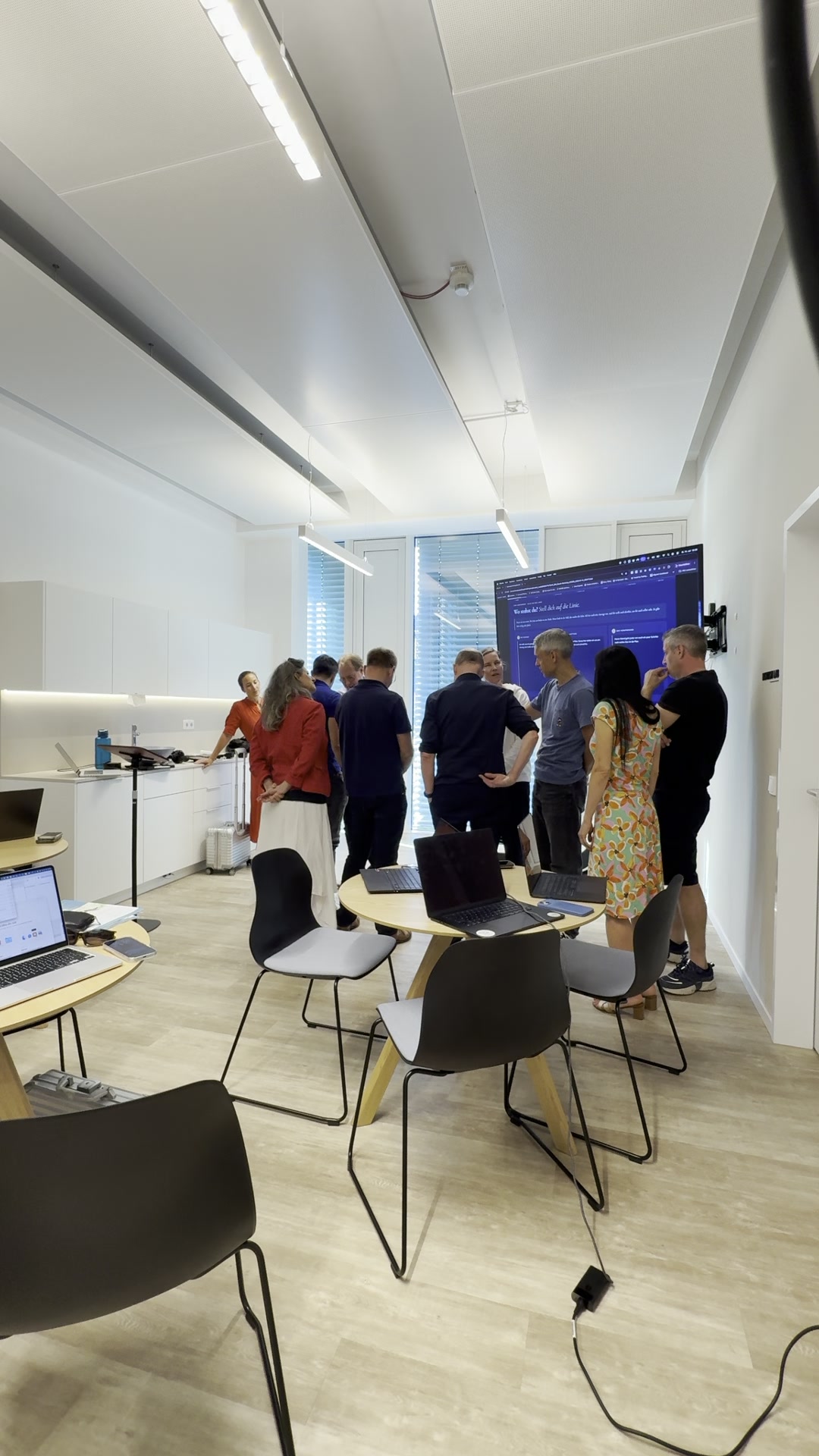
The real highlight of the evening was a group exercise: Everyone analyzed the same quarterly report from a sample limited liability company (GmbH) over three rounds. Round one: a vague, open-ended question for Claude, the kind often asked in everyday life. Round two: a structured briefing based on the framework we’d just learned. Round three: refining the answer together, sentence by sentence. The difference between round one and round three was immediately apparent to everyone in the room, and it was precisely this difference that became the evening’s key learning moment. In the live demo, the report was then transformed into a complete dashboard, and a preview showed agents working independently toward a goal.
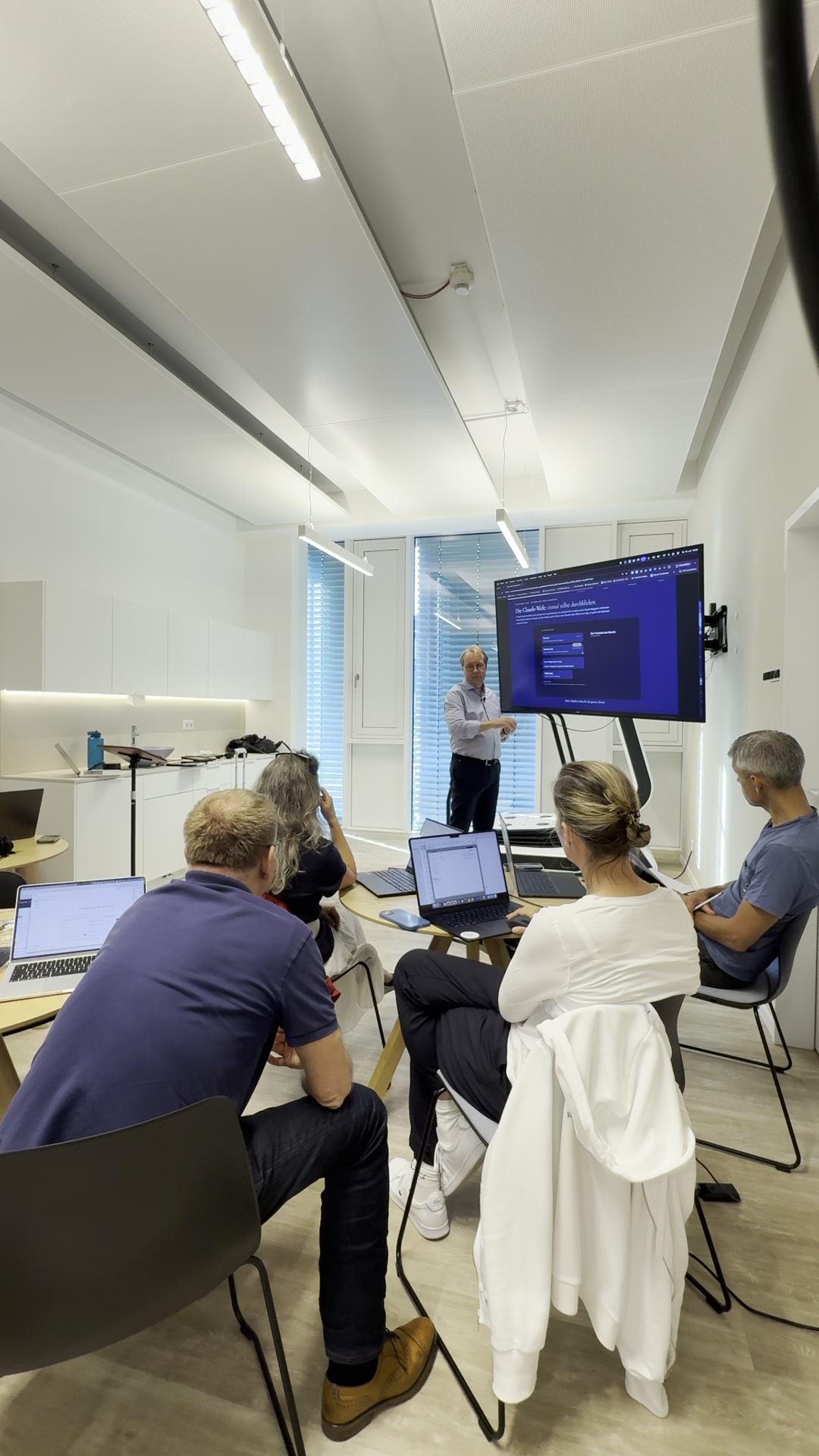
The exercise sparked an open discussion: Where does Claude help as a structuring tool that turns a rough draft into a clear outline? Where does it serve as a knowledge database that keeps one’s own documents, processes, and recurring questions at your fingertips? And where does it function as a sparring partner that reflects back an idea before it leaves your desk? This time, the answers didn’t come from the front of the room, but from the room itself—from seven different companies facing seven different challenges. That was precisely the value of the evening: Instead of discussing a single example, we examined seven real-world scenarios all at once.
Most of the rest of the evening was devoted to the development phase: Each participant built two test projects tailored to their own work context, as well as their own skill—that is, a reusable set of instructions for Claude. In the end, everyone went home with a personal assistant they’d built themselves—not a demo example, but a tool they could put to use in their own work starting the very next morning. A step-by-step guide explains how to create your own skill.
Why Live Workshops, Even Though There Are Online Courses?
An online course is great for conveying knowledge at your own pace: pause, review, then continue when you have time. A live workshop offers something different: the moment when a group works together on a real-life example, asks questions on the spot, and immediately sees how a better briefing makes a difference. The direct exchange with other entrepreneurs facing similar challenges is something that’s hard to capture in a video.
The two are not mutually exclusive; on the contrary, they complement each other. If you prefer to learn in a group setting, seek immediate feedback, and benefit from others’ questions, the workshop is the right choice for you. If you prefer to learn at your own pace, review the material in peace, and complete the exercises when you have time, you’ll find the same fundamentals in the online course. Many people end up using both: the workshop for that initial boost, and the course for further study afterward.
What Happened Next
It didn't take long for feedback on the event to start coming in: As early as the very next day, new 5-star reviews appeared on Google—a clear sign that the event was not only informative but also made a real difference.
More live workshops in the Stuttgart area are in the works. If you'd like to attend the next session, please sign up directly through our Claude Training page—we'll notify you as soon as the date is set.
If you'd prefer to learn the basics now and at your own pace, you can find them in the LHC Academy's German-language online course, for 249 euros: Discover the Claude Basics Course.
And if you'd like to organize an evening like this for your own company or team, you can find the in-house option here: Request an in-house workshop.
Lighthouse Consultings is a partner in the Claude Partner Network (Registered).
At the end of the evening, the laptops remained open for a while. Not because the workshop wasn't over, but because seven people had just begun working with a tool that would now be available to them.